
A product-led GTM strategy provides a new framework for how leading SaaS organizations think about taking products to market and acquiring, retaining, and growing customers in a repeatable, scalable way.
Top management must get behind this approach to ensure the whole organization is supporting personalized customer experiences. We’ve discussed a few ways that product-led strategy enables companies to focus on personalized customer experiences. Let’s cover three pillars that are essential to delivering these experiences:
But first, answer these questions:
If you answered “no” to one or more of these questions, it’s critical that you put in place the following elements to support your product-led GTM strategy.
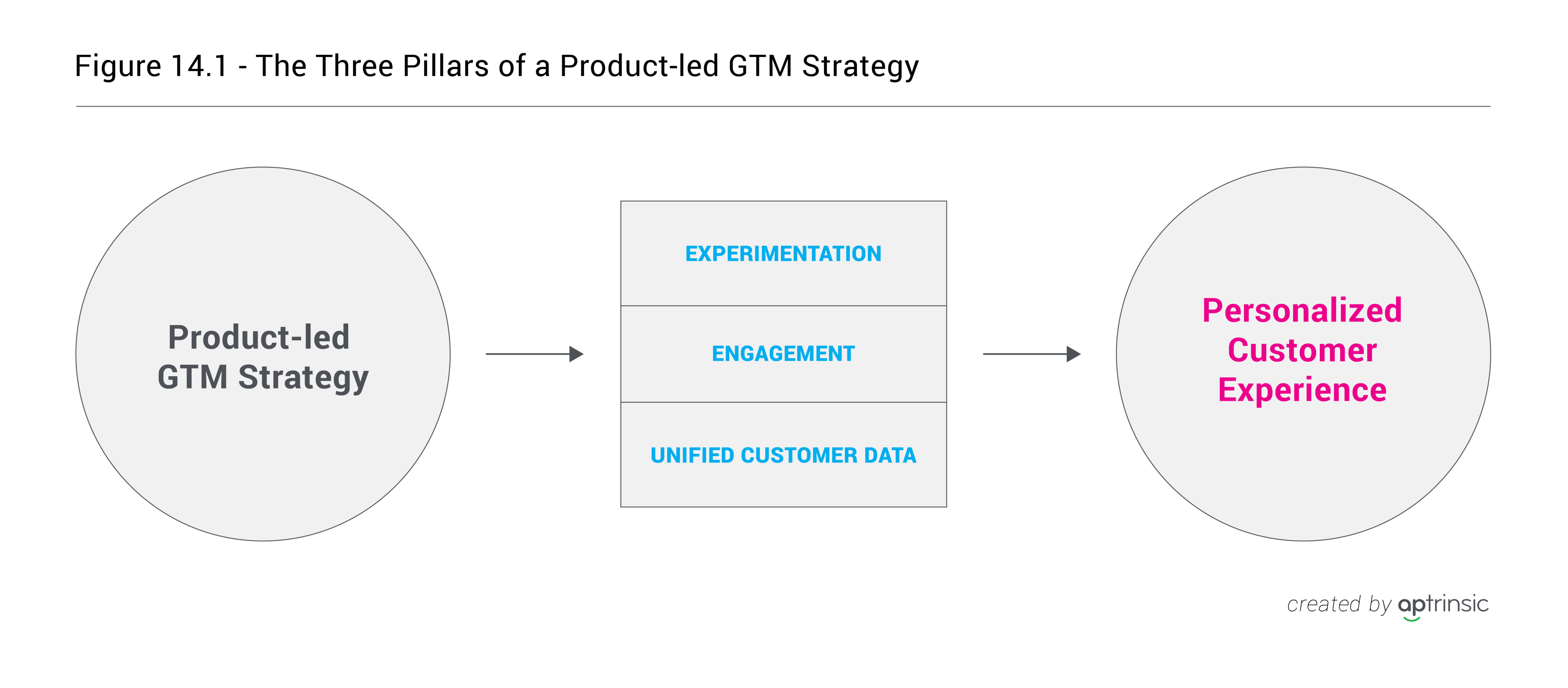
Figure 14.1 — The Three Pillars of a Product-Led GTM Strategy
According to the 2016 “Businesses @ Work” report by Okta, an average organization uses 13 cloud applications. Many of these cloud solutions create or store customer profile and/or behavioral data. At the same time, most organizations still rely on a combination of on-premise and cloud-based applications to capture and store this information (such as CRM, marketing automation, customer support, and customer success solutions). The challenge for many organizations is to aggregate customer data across all systems of record, no matter where they reside.
It’s not about dumping all available data into one data warehouse. It is not enough to know that a user with a certain e-mail logged into your product. Teams should also be aware, for example, of how much a customer is paying, as well as how many team members are using the product and the number of open support tickets attached to the account.
The cornerstone of a successful product-led strategy is understanding: